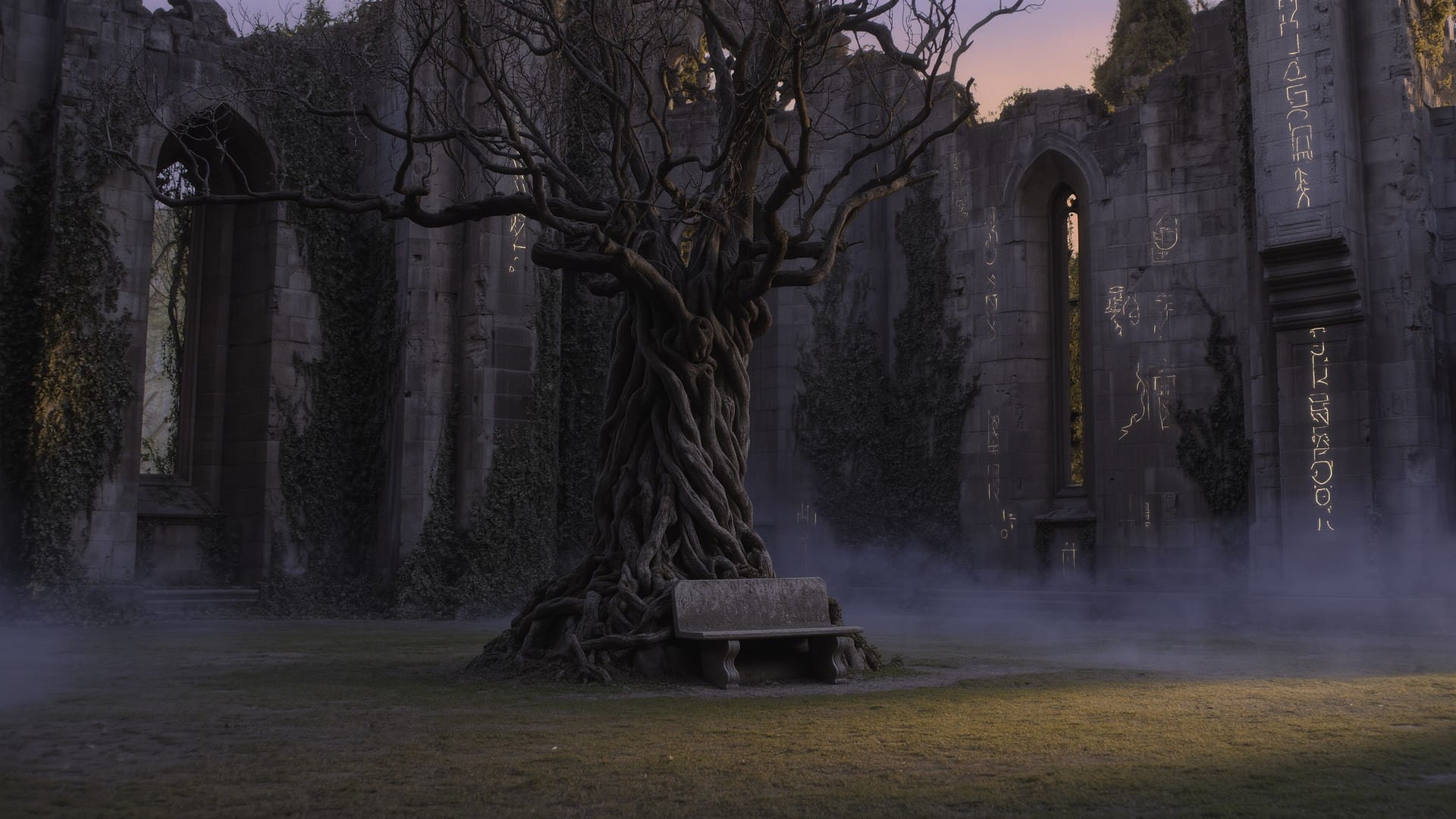
Iron and Flame: Why My Queen Wins the War by Not Fighting
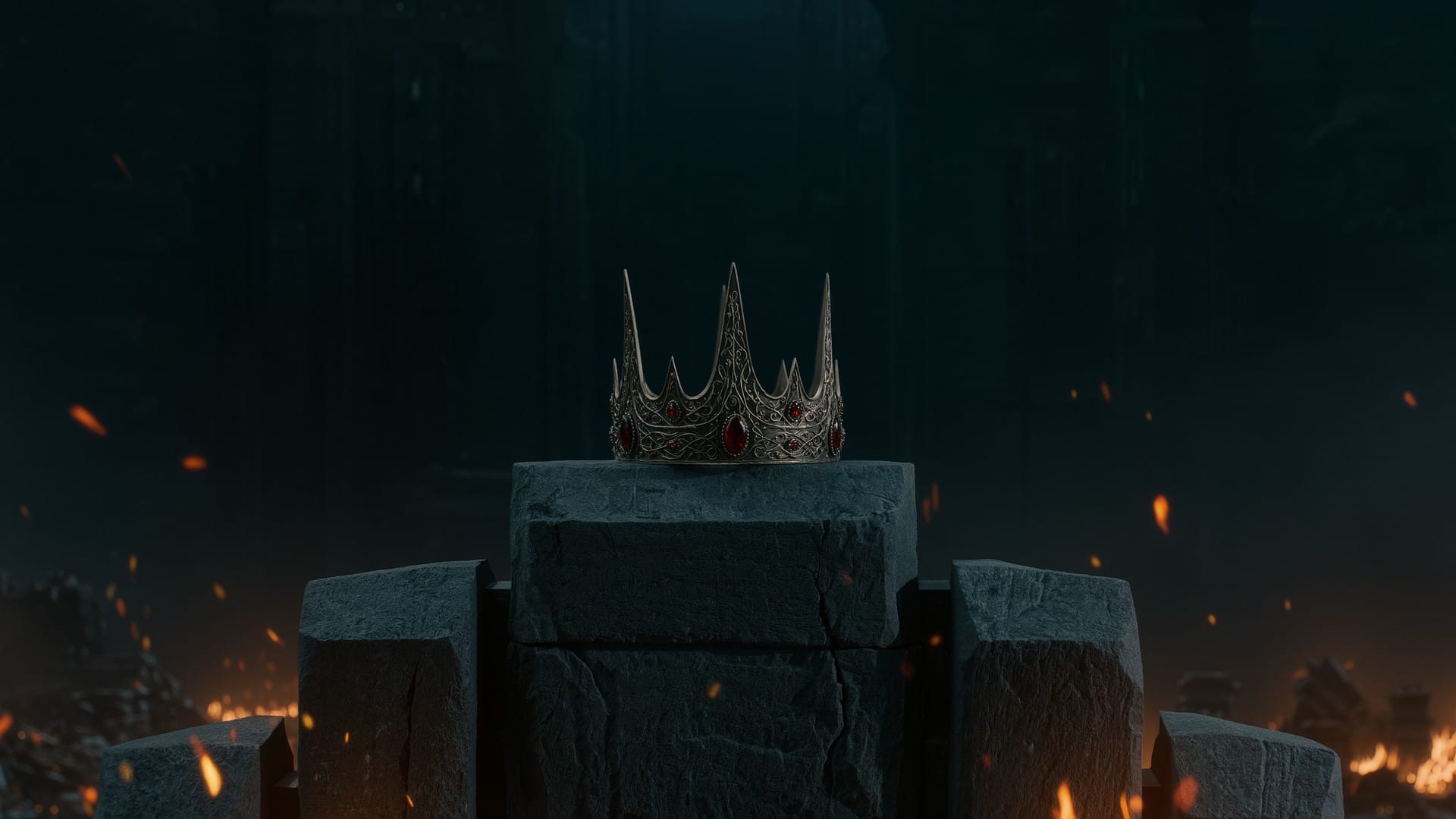
There is a moment in Iron and Flame that I rewrote eleven times, and I still don't think I got all the way to the bottom of it.
Aria is standing on the inner wall of her own city. She is pregnant with her second child. Her husband, Darius, is somewhere on the far side of an army fifty thousand strong, alive only because a Korrathi war-marshal decided a captured king was worth more breathing than dead. And five-year-old Elena is beside her mother on the wall, holding the hem of Aria's cloak, watching the torchlines of the enemy spread across the valley like a second, lower set of stars.
Every instinct a warrior queen is supposed to have says the same thing. Fight harder. Spend more. Send the cavalry out at dawn and make the field cost them. Aria has done exactly that for three books now, and she has the journal to prove it — a list of names, written in her own hand, of everyone who died winning her a throne.
And on that wall, with her daughter's fist closed around her cloak, she decides she is not going to do it again.
The question I was actually afraid of
Here's the thing. I did not set out to write a war book. I set out to write the book where Aria stops.
The first three Fallen Hearts books are an escalation, and I built them that way on purpose. Stolen Hearts is a girl with nothing reclaiming a kingdom one impossible alliance at a time. Fractured Crown is that same woman learning that keeping a crown is a knife fight you can't see — poison, whispers, the friend at your own council table. By the time Iron and Flame opens, Aria is very, very good at winning. She knows how to bleed an enemy. She knows how to make the hard call and write the name down after.
So the question that scared me — the one I'd been circling since I started the series — was simple. What happens to a person who is excellent at violence the day violence stops working?
Because that's the real wall in this book. It isn't the Korrathi siege engines. It's the moment Aria realizes that the thing she's best at, the thing that saved her every single time before, will not save her now. Fifty thousand soldiers and a captured husband cannot be out-fought. They can only be out-thought. And out-thinking them means doing the one thing her whole life has trained her to never do: lower the blade first.
"Wisdom over vengeance. Partnership over conquest." That's the line I wrote on a sticky note and kept on my monitor for the whole drafting. It's not a slogan. It's the hardest thing my heroine ever does.
I'll be honest — I almost flinched. There is a version of book three that is just a bigger battle than book two, and it would have been easier to write, and a lot of fantasy readers would have been perfectly happy with it. Swords are fun. Sieges are fun. But it would have been a lie about who Aria had become, and worse, it would have been a lie about what the whole series is for.
Motherhood was never the side plot
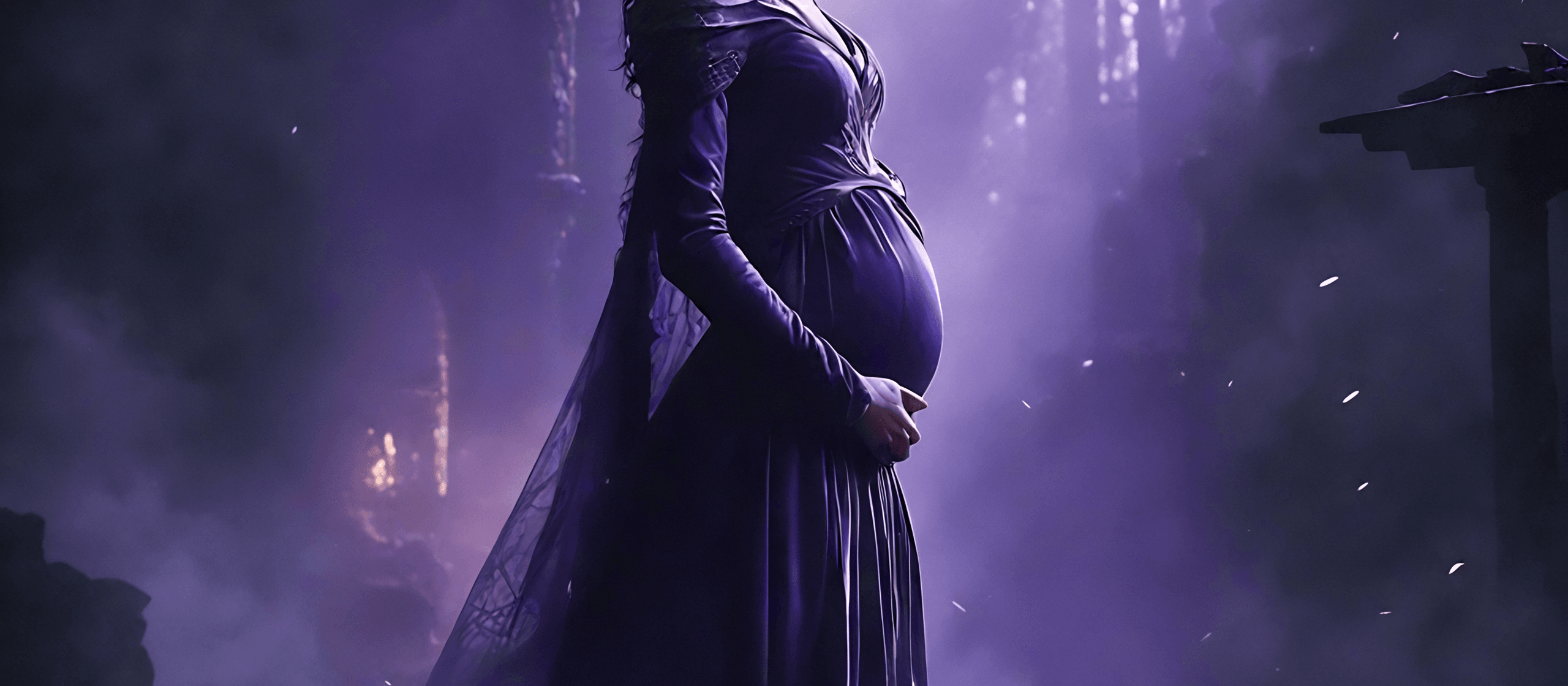
People sometimes ask me why Aria keeps getting pregnant at the worst possible moments. (It's a fair question. The woman cannot catch a calm trimester to save her life.)
The honest answer is that I did it on purpose, because the pregnancy is not a complication to the leadership story. The pregnancy is the leadership story.
A queen who can die in a throne room is a tragedy. A queen who is carrying a child, with a five-year-old watching her from the wall, cannot afford to spend herself the way a younger Aria would have. She is no longer the cheapest piece on her own board. And that changes the math of everything. When you can throw your own body at the problem, brute force is always an option. When you can't — when surviving is no longer optional but mandatory, because two small people are depending on you walking off that wall — you are forced to get cleverer. You are forced to find the door instead of the battering ram.
That's the part I find genuinely romantic, and I mean that in the deepest sense the word has. Darius is captured for most of this book. The love story isn't him riding to her rescue. It's her refusing to burn down the world to get him back, because the world she'd be burning is the one their children have to live in. Rescuing him recklessly would betray the exact thing that made their marriage a partnership and not a fairy tale. So she has to be smart. She has to be patient. She has to gamble on diplomacy with the very people holding the man she loves.
Restraint, it turns out, is the most demanding love scene I have ever written. No one takes their shirt off. It almost killed me.
The gamble that shouldn't work
I want to talk about the war-marshal for a second, because he's the hinge the whole book swings on, and writing him taught me something about my own heroine.
The Korrathi did not come for plunder. They came for conquest — which means, unlike a raiding party, they actually have to live here afterward if they win. That single fact is the crack Aria pries open. An empire that wants to rule a kingdom has a weakness a horde never does: it needs the kingdom intact. It needs the harvests, the roads, the people who know how to run the mills. Burn everything to the waterline and you've conquered an ash heap.
So Aria's "unthinkable" gamble is not naive pacifism, and I'd hate for anyone to read it that way. It's the coldest read of the board she's ever made. She offers the war-marshal something his emperor never will: a version of victory that doesn't cost him twenty thousand men and a generation of insurgency. She turns the math of the siege against the people running it. It's strength, just pointed somewhere new.
What I had to learn to write — and this is the part that nearly broke the draft — was the exhaustion underneath it. Three books of war live in Aria's body by now. I tried to put it in everything: the way she sleeps in her armor without noticing, the way she counts her soldiers by the gaps in the line instead of the men still in it, the way a victory lands on her like one more weight instead of a triumph. I never once wrote the sentence "she was tired of war." I'd cut my own hand off first. You earn that feeling by showing it bleed through a hundred small moments, or you don't earn it at all.
The girl holding the cloak
Now, about Elena.
She's five in this book. She has maybe a dozen lines. And she is, quietly, the most important person on that wall — because Iron and Flame is the book where the Fallen Hearts series turns its head and starts looking at the next generation.
I planted her there on purpose. Everything Aria does in book three, she does while being watched by a child who will one day inherit the consequences. When Aria chooses to build instead of burn, Elena is learning, without a single lesson being spoken aloud, what a queen is allowed to be. The whole back half of the series belongs to Elena — a girl who takes a throne at sixteen with her mother poisoned into a coma and armies already at the gates. The wisdom she'll need then is being modeled in front of her now, on a cold parapet, by a mother refusing to spend lives she doesn't have to spend.
That's the thing about writing a saga across three generations. Every choice echoes forward. The sword Aria lays down in Iron and Flame is the inheritance she's actually leaving — not the crown, not the treasury, but the example. I didn't fully understand that until I was deep into the later books and realized the scene on the wall had been the seed of all of it. (Drafting a long series is mostly the experience of discovering you were smarter on page one than you remembered being.)
Why a romance reader should care about a siege
Let me say the slightly contrarian thing out loud, because I think it matters. A lot of people hear "epic fantasy with fifty thousand soldiers" and assume the romance got shoved into a corner to make room for the maps. And a lot of people hear "romantic fantasy" and assume the war is just scenery for the longing.
I don't write either of those books. In Iron and Flame, the war and the love story are the same machine. The thing keeping Aria from doing the brutal, simple, satisfying thing — the thing that makes her reach for the harder solution — is the family she built across three books. Darius. Elena. The found family from Stolen Hearts who are still here, still bleeding for her, still the people she chose when the blood family she was born to was murdered out from under her.
That's the whole series in one sentence, honestly: the family you choose is worth more than the blood you lost. Book three is just where that idea stops being a comfort and starts being a constraint — the loving kind of constraint, the kind that makes you a better ruler because you are no longer willing to be a worse person.
I think that's why the readers who write to me about this one rarely lead with the battles. They lead with the marriage. They lead with the small scene where Aria, exhausted past speaking, just leans her forehead against a door Darius isn't behind anymore and breathes. There's no spell in that moment, no army, no clever stratagem. Just a woman missing her partner and deciding, again, to be patient enough to get him back the right way. The siege is the loud part. The love is the load-bearing part. Take it out and the whole book falls down.
So when Aria attempts the unthinkable and tries to turn her invader into an ally, it doesn't read as a tactic to me. It reads as the most grown-up version of love I know how to put on a page. Not the swoon. The choice. The decision, made on a cold wall with a child holding your cloak, that you would rather build something than win something.
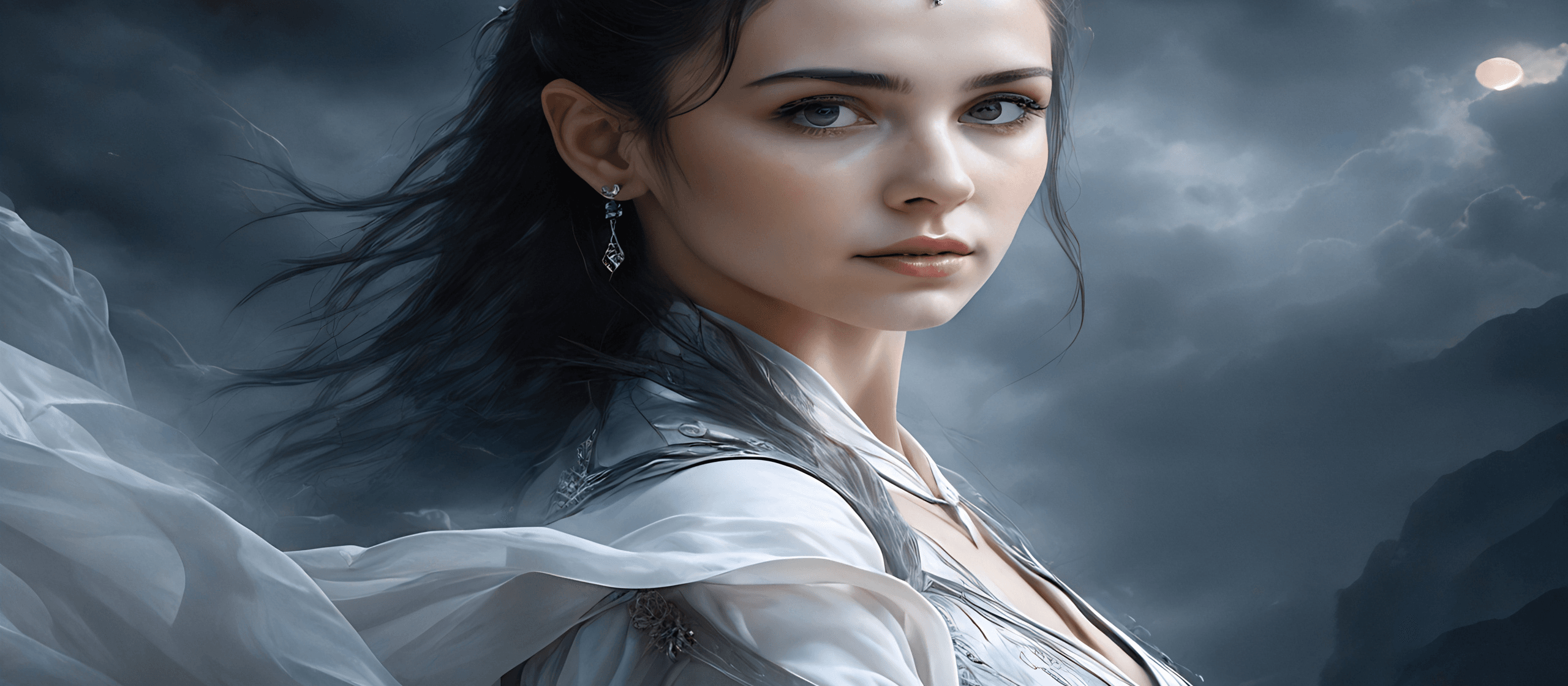
Where it sits, and whether you can start here
So — do I recommend Iron and Flame?
Yes, with one honest caveat. This is book three, and it hits hardest if you've watched Aria climb. The whole point is that you've seen her be the warrior who solves things with steel, so that watching her refuse to means something. If you start here cold, you'll get a complete, satisfying story — I write each book to stand on its own two feet — but you'll miss the gut-punch of recognizing how far she's come from the desperate exile in book one.
If you're new to the Fallen Hearts series, my honest advice is to begin with Stolen Hearts and let the three books do to you what they're meant to do, in order. The whole arc is seven books across three generations of warrior queens, so there's a long, slow-burning road ahead of you, and the early rungs make the high ones land. And the good news for the budget-conscious among us (I see you, I am you): the whole series lives in Kindle Unlimited, so you can start the climb without spending a thing.
Iron and Flame is the book where my heroine discovered that the bravest thing a strong woman can do is sometimes to be the first one to stop. That took me three books and eleven rewrites of one scene on a wall to earn. I hope it wrecks you a little. That's the job.
That's my take on things, anyway. Now go meet Aria — and tell me, when you get to the wall, whether you'd have laid down the sword too.