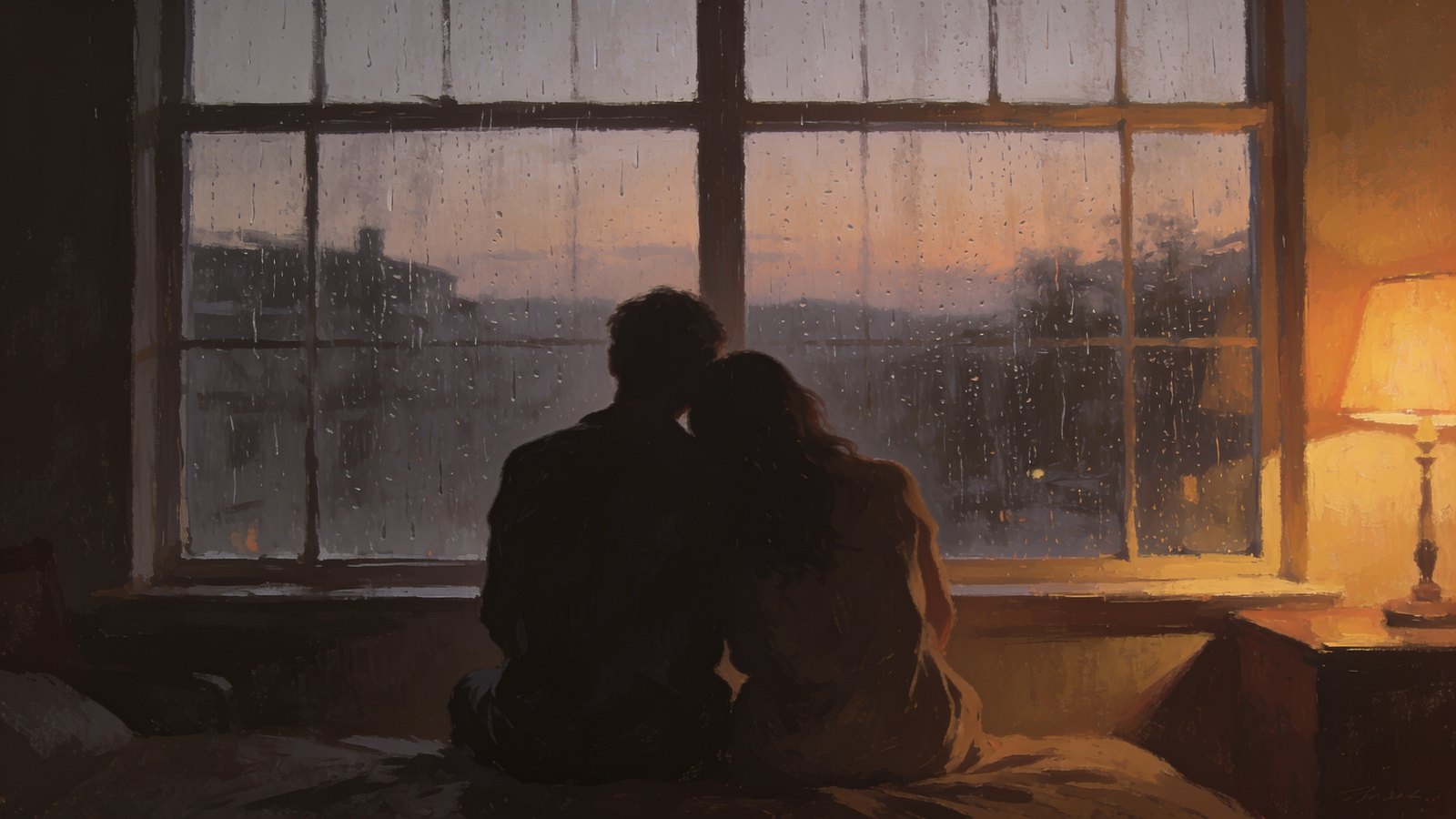
The One Bed Trope: Why It Works Every Single Time
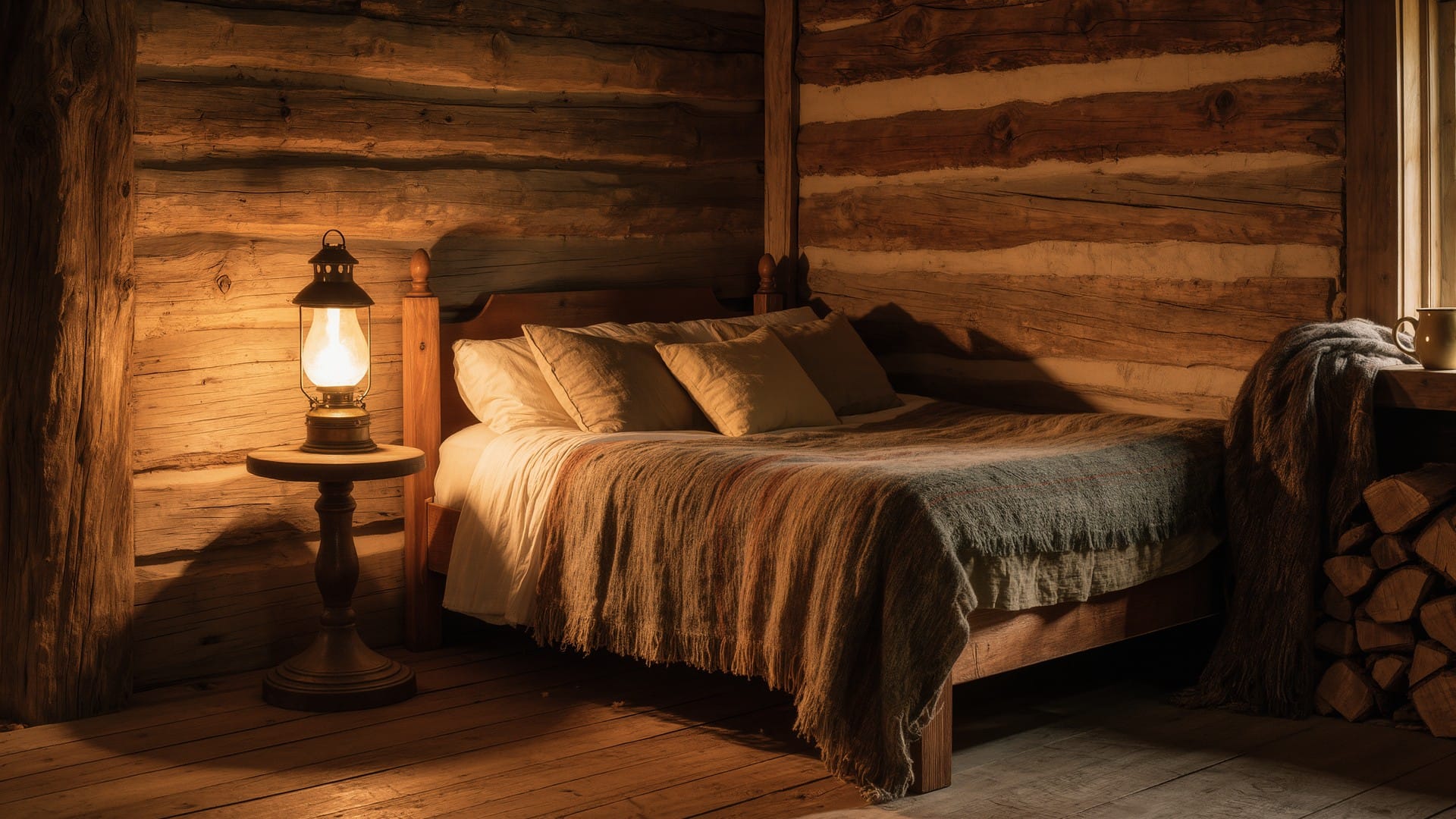
Why this one?
I have written the one bed scene more times than I would admit at a dinner party.
Snowed-in cabin. The reservation that got eaten by a system error. The inn that only has the honeymoon suite left, ma'am, and isn't that just the saddest little violin you've ever heard. I keep coming back to it. My editor once circled a paragraph and wrote "again??" in the margin, and reader — it was again. It is always going to be again.
Here's what I've made my peace with: it works every single time. Not in spite of being predictable. A little bit because of it.
So let me talk about why. Because "predictable" gets thrown around like an insult in this genre, and I have never once agreed.
What the bed is actually doing
The trope is never about the bed. I know that sounds like something a writing teacher would say with their eyes closed, but stay with me.
When you put two people who are not ready to be honest with each other into a room with one soft surface and no exits, you take away every tool they've been using to avoid the truth. There's no leaving early. No "I should get going." No third friend to deflect a question to. No phone to suddenly find fascinating. Just two people, the dark, and about eighteen inches of mattress that neither of them will admit they're aware of.
Proximity does the work that dialogue can't. A character can say "I'm fine" all day. A character cannot lie with their whole body when the person they're lying to is six inches away and breathing slowly and pretending to be asleep. The reader knows. The character knows the reader knows. That gap — between what's said and what the body is doing — is where the tension lives, and the one bed cranks it to an almost unbearable place for free.
That's the part people miss when they call it lazy. It isn't a shortcut around emotional work. It's a pressure cooker for emotional work. You've removed the escape routes, so now the feelings have nowhere to go but up.
The difference between trapped and lazy
Now. Here's where authors fumble it, and I include past versions of myself in that.
The trope only works if the constraint is real. If I'm reading a scene and the back of my brain is going they could just sleep in the car — or get a cot — or call literally any other motel — then the spell breaks, and it breaks hard. Suddenly I'm not watching two people fall in love. I'm watching an author move furniture around to force a kiss, and I can see her hands.
The forced part of forced proximity has to be load-bearing. The blizzard has to actually be a blizzard. The reason they can't get a second room has to survive a skeptical reader poking it. My personal rule, learned the hard way: if a sensible, slightly annoyed adult could solve the situation in one phone call, I haven't earned the bed yet. I've just decided I want it.
When it's done right, the characters try to escape it. That's the tell. He offers to take the floor. She insists she'll be fine on the tiny loveseat that is clearly going to wreck her back. They do the whole polite dance of two people who very much do not want to admit they'd rather not have the space. And then the dance fails, the way it has to, and they end up exactly where the reader has been quietly praying they'd land for forty pages.
The wanting-to-leave is what makes the staying mean something.
The ones that ruined me for everyone else
I'm not going to pretend I built this on my own. Every romance writer working today is standing on a very cozy, slightly crowded bed of people who did it first.
Emily Henry's People We Meet on Vacation is the cleanest modern example I can point to. Two best friends, one trip a year, a decade of almost — and a hotel room that finally, mercifully, stops letting them pretend. By the time the room situation goes sideways, you have earned it as a reader. You've waited as long as they have. That's the trick: she made me feel the proximity as relief, not contrivance.
Sally Thorne's The Hating Game does the adjacent version — not strictly one bed, but the enemies-who-can't-get-away engine running at full throttle, until the day one of them is too sick to keep up the armor and the other one just... stays. Same machinery. Remove the exits, watch the truth leak out.
And honestly? The genre's been doing this since long before any of us. Elizabeth Bennet, stranded at Netherfield because her sister caught a cold and the weather wouldn't cooperate, forced under the same roof as the most infuriating man in three counties. Austen knew. Trap the smart, guarded woman in the house with the man she's decided to despise, and let the walls do the talking. Two hundred years later I am still, essentially, writing that.
I do it too, and I'm not sorry
In Wild Flowers I put a houseful of sisters under one roof who could not, for love or money, get away from each other — and the thing about people who can't leave is that they finally have to deal. The proximity wasn't the romance. It was the crowbar that pried everyone open.
Fallen Hearts is the long game version. No blizzard there, no one bed in the literal sense, just two people orbiting the same small world for years, kept close by circumstance and history and a hundred things neither of them will say. Forced proximity doesn't always look like a snowstorm. Sometimes it's a hometown you both keep coming back to. Sometimes it's a family neither of you will abandon. The bed is just the loudest version of a thing romance has always understood: people change when they can't keep their distance.
I reach for it because it's honest. We are all, every one of us, more truthful at two in the morning when we can't sleep and someone we're not ready to love is lying very still a foot away. I didn't invent that. I just keep writing it down.
The trope has more outfits than you'd think
People say "one bed" but they mean a whole wardrobe, and I love every piece of it.
There's the snowed-in cabin, patron saint of the genre. There's the fake-dating setup that requires a shared room at someone's destination wedding, which is just the one bed in a nicer dress. There's the road trip — one car, one bad map, one motel with a flickering sign and exactly one vacancy. There's the bodyguard who has to stay close, where the proximity isn't an accident at all, it's the job, and the job slowly turns into something neither of them signed up for. There's the stranded version: the delayed flight, the dead battery, the storm that grounds everything. And there's the slow one — the forced cohabitation, the roommates-by-circumstance, the inherited house with a clause that makes two stubborn people share a kitchen for a year.
They all run on the same engine. Take away the option to walk out, and watch what happens to people who have been leaning on the option to walk out.
And since you asked — you didn't, but I'm telling you — my favorite is the one where the proximity is nobody's fault. No villain engineered it. No best friend "accidentally" booked the one room with a wink. Just weather, or bad luck, or a job, doing what weather and bad luck and jobs do. There is something so much more romantic about two people undone by circumstance than two people maneuvered by a meddling matchmaker. The universe did this. Take it up with the universe.
How the trope grew up
Here is something I love about where romance is right now: the one bed got a consent rewrite, and it made the trope better, not tamer.
The old version sometimes worked by quietly taking away a character's say. One of them just decided, and the other had to deal, and we were all supposed to find that swoony. I didn't, even then. The modern version is so much hotter, and I will die on this hill — the characters talk about the bed. Out loud. "I can take the floor." "Don't be ridiculous, it's freezing, we're grown adults." "You're sure?" "Are you?" And suddenly the negotiation itself is the foreplay. Every offer to sleep on the loveseat is a tiny confession. Every "I'm sure" is a door cracking an inch wider.
Communication didn't kill the tension. It sharpened it to a point. Because now the bed isn't something that happens to them — it's a thing they choose, eyes open, both of them pretending the choice is purely logistical while the reader screams into a throw pillow. Two people being honest about the logistics and dishonest about the reason. Every single time.
I rewrote a scene like that not long ago. Took out the version where one character sort of took charge, and replaced it with the two of them awkwardly, ridiculously negotiating who got which side of the mattress. It went from a fine scene to the scene people email me about. Readers can feel the difference between being handled and being chosen. They always could. We are just finally writing like we believe it.
Why we keep coming back
I think about the reader a lot when I write these. Specifically, I think about the reader who knows. The one who saw "the cabin only has the one bedroom" coming from three chapters away and did not roll her eyes — she settled in. Pulled the blanket up. Got comfortable, because she knew exactly what was about to happen, and that was the entire point.
We don't read romance to be surprised by the ending. We know how it ends. That's the contract. The genre promises you the happy landing up front, signs it in ink, and then spends the whole book making you sweat the how. The one bed is that whole promise in miniature. You know they're going to end up closer than they planned. The pleasure was never the what. It's the slow, delicious, unbearable how.
So when someone calls it predictable, I want to ask: predictable to whom — and since when did predictable become a crime in a genre built on a guaranteed ending? You don't ride a roller coaster for the surprise of where the track goes. You ride it for the drop you can see coming the entire way up.
So, is it overused?
Here's my actual verdict, and I've thought about it more than is healthy.
No.
A trope isn't overused. A trope is executed well or badly, and there's a world of difference between the two. Nobody walks out of their favorite diner complaining that the grilled cheese was predictable. You ordered the grilled cheese because you wanted the grilled cheese. The one bed is comfort food, and there is absolutely nothing wrong with comfort food. The wrong thing is a lazy grilled cheese — cold in the middle, no care in it. Execution. Always execution. Give me a one bed written with real care and I will follow those two stubborn, blushing idiots anywhere: into the blizzard, onto the wreck of a loveseat, all the way to the last page where they finally stop pretending the eighteen inches between them was ever the problem.
So I'll keep writing the snowed-in cabin and the one room left and the floor that nobody actually wants. I'll keep making my characters try to be reasonable about it and fail. And every time, somewhere, a reader is going to grin into their kindle at midnight because they knew it was coming and they wanted it to come.
That's not a flaw in the genre. That's the whole promise.
I'll see you at the cabin.
Related Posts

Why I Set Bellefond in Saint Lucia

The Second Book Problem: Why Romance Series Are So Hard to Sustain