The Garden Behind the Garden: Wild Flowers, the Board, and the Architecture of a Sisterhood
The Garden Behind the Garden: Wild Flowers, the Board, and the Architecture of a Sisterhood
Behind the five-book Wild Flowers thriller is an organization with a real architecture. Floor plans I drew on graph paper. A 1994 founding date I locked down before I wrote a word of Nightshade. A list of eleven women who took flower codenames in the order I wrote them, on a single index card I still have. The Board, the consortium, the Inheritors — those were not back-fills. Those were on the index card.
Some of what follows assumes you have finished Wolfsbane. If you have not, save this for after.
I. The Cottage, October 1994
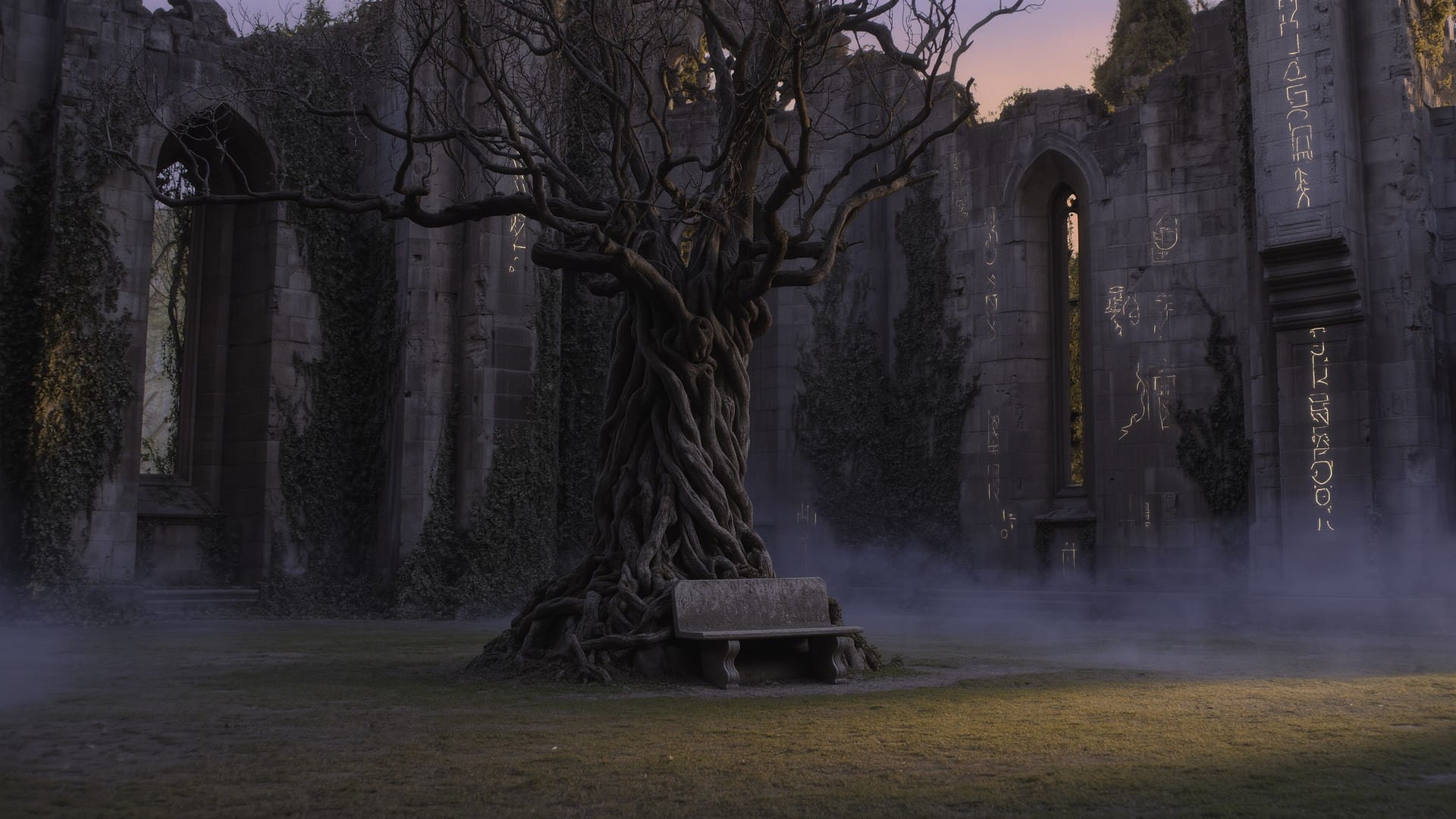
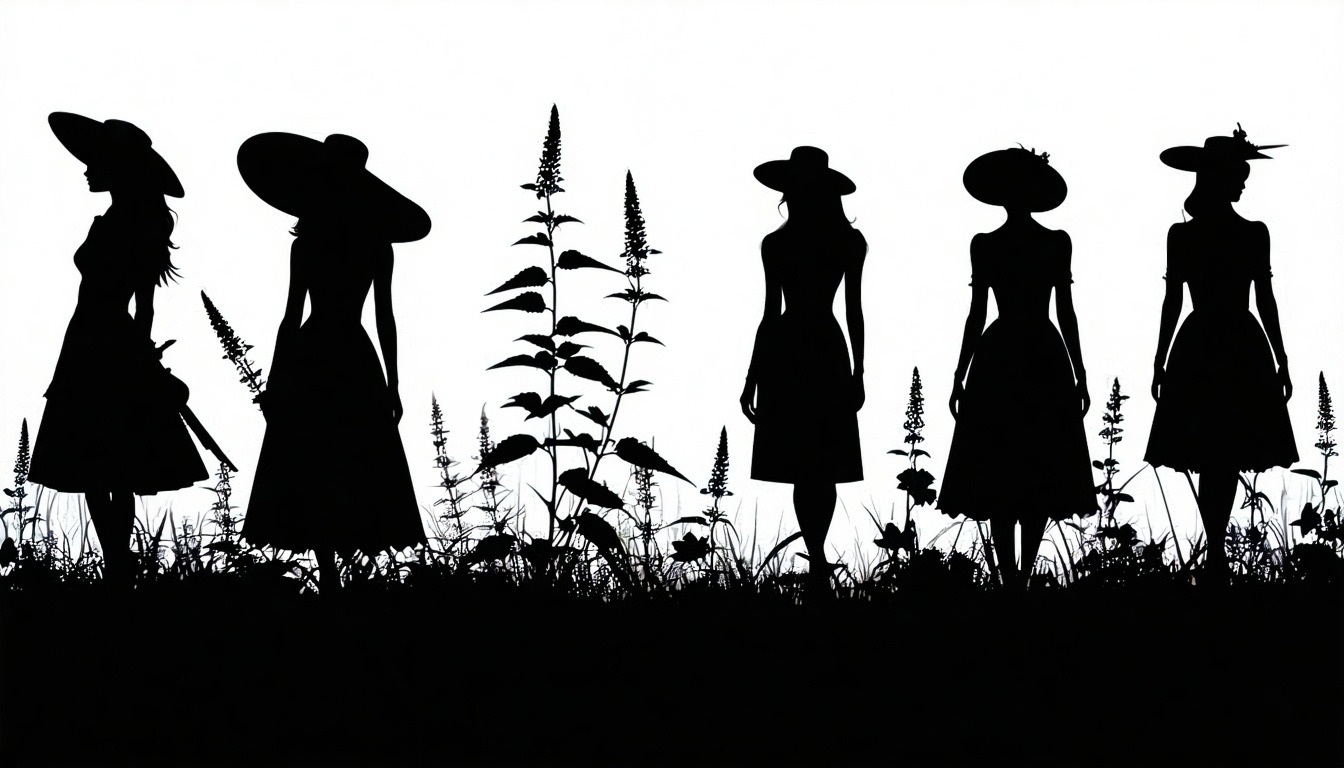
The founding scene is not in any of the books. I cut it from Hemlock six months before publication, and the deleted-scene post on this site has the version I almost kept. What you need to know about it for everything else to make sense is this: in October of 1994, in a stone cottage on the western coast of Scotland, five women sat around a kitchen table and agreed to build something.
Three of them were sincere. One — Original Hemlock, Miranda Walsh — believed she was sincere and would spend the next eighteen years discovering she had been wrong about who recruited her. The fifth, Eleanor, was a Board plant. Wild Flowers was a vigilante sisterhood designed to eliminate predators the law could not touch, and it was also, from the first night it existed, an intelligence-services proxy designed to murder people the Board needed dead and could not be seen to kill. Both things were true from the beginning. Lily Morgenstern, who would become the second Gardener and the moral spine of the organization for thirty years, did not know this. Miranda did not know this. The compromise was not a corruption that crept in. It was the founding mortar.
This is the load-bearing fact of the series. Everything Maya Chen learns across five books, she is learning late. The corruption was not introduced by the Board in Oleander. It was the floor she had been standing on since Nightshade.
II. The Compound
The Pacific Northwest compound — the place new recruits arrive in chapter three of Nightshade — is a Victorian estate fifteen miles north of Seattle, sitting on twelve acres bought in 1995 through a shell that traces, eventually, to a Board-adjacent intelligence trust. None of the operatives knew this until Hemlock chapter seven.
The estate has, in the order I drew them on the floor plan:
- A main house with a dining room that seats twenty-six, a library that holds the operational archive, and a Victorian conservatory wing where Dr. Reeves does therapy on Sunday mornings.
- A gymnasium and combat range converted from the original carriage house.
- An urban-environment simulation building on the back lot — three storeys, modular interior walls, full electrical, a working bar.
- A weapons room, a tradecraft suite, and a tactical operations center disguised as a wine cellar.
- A greenhouse with eleven raised beds, each labelled with a codename. The greenhouse is the only place on the compound that operatives go alone, by tradition. You plant your flower the night before your first kill. You tend it for the rest of your tenure. If you leave the organization, alive or otherwise, the bed is left fallow until your name is replaced.
The greenhouse is the spine of the series. Maya plants nightshade there in Nightshade chapter seventeen. Lily plants hemlock the same night, with hands that already shake. Iris plants iris. Sage plants sage in Oleander. Victoria's oleander has been in that greenhouse since 1996. Wisteria's bed is left fallow in Hemlock without a replacement.
In the Yorkshire compound that Maya stands up at the end of Foxglove, there is a new greenhouse with new beds. It is not the same one. That is on purpose.
III. The Codename System
Every operative is named for a poison flower. The pattern is older than Wild Flowers — it traces to the original Operation Hemlock, the 1994 sanctioned-but-deniable assassination of Robert Davidson by Original Hemlock (Miranda Walsh). The Board liked the symbology and kept it. Lily Morgenstern, when she became the Gardener after Miranda's exit in 1996, kept it for her own reasons. Poisons are intimate. Poisons require knowing your target. Poisons are also, traditionally, a woman's weapon, in cultures that have insisted weapons should not be women's at all. Lily liked all three meanings.
The codename is assigned at the Blooming ceremony in the greenhouse — the Wild Flowers equivalent of a graduation, except the diploma is a flower bed. Across all five books, eleven women hold flower codenames at the same time at any given point in series history. The eleven Maya knows in Nightshade are, in order of seniority: Victoria/Oleander, Wisteria, Jasmine, Thorn, Foxglove (the original), Hemlock (Miranda Walsh, in absentia), Briar, the Gardener (Lily, who does not technically take a flower codename because she is the gardener), Nightshade (Maya), Iris, and Lily-the-recruit (who takes Hemlock when Miranda's name is finally vacated).
The seniority is not a chain of command. It is a chronology of who planted first.
IV. Methods
Wild Flowers operatives kill almost exclusively by poison. There are reasons.
The legal one: poison is the murder method that least visibly resembles murder. Toxicology takes time. Cause of death is contestable. A wealthy man dying in his own dining room of an apparent cardiac event is news for a day. The same man dying with a bullet in him is news for a year. Wild Flowers needs the news cycle to be a day.
The operational one: poison rewards infiltration over confrontation. An operative who can poison a target's drink can also walk out of the room afterwards, which is the part that matters.
The signature ones: aconitine, tetrodotoxin, contact-route poisons, slow-acting neurotoxins designed to leave the target dead two days later in another city. The greenhouse on the compound grows roughly a quarter of the precursors. The other three quarters come from a network of legitimate pharmaceutical and botanical suppliers that the operations branch has been cultivating, in some cases, for two decades.
The signature and the load-bearing fact of Wolfsbane: the aconitine that kills Lily Morgenstern in chapter three is synthesized to a Board-standard protocol that was supposed to have been destroyed in 2018. Alexei traces it in chapter five. That is how the series ends where it ends.
V. The Board
The Board is not, despite what Maya and Sage spend most of Hemlock assuming, a single intelligence agency. It is a consortium of senior officers — at the time of the series, twelve of them — drawn from MI6, CIA, FSB, BND, MSS, DGSE, ASIS, MOSSAD, RAW, and three private intelligence firms with deep state contracts. The Board does not have a building. It has a rotating chair, a quarterly meeting, and a series of dead-drop protocols that are upgraded on average once every fourteen months. Its operating principle is what the founding charter calls deniable convergence — the idea that intelligence agencies that need the same person dead can pool resources to kill that person, and pool deniability so that no individual agency takes the blame.
Wild Flowers was never the Board's only proxy. It was, for thirty years, its most useful one.
The Board's biggest mistake — the one Maya pries open across books three through five — was that they thought of Wild Flowers as a tool. Tools do not develop opinions. Tools do not promote from within. By the time Lily Morgenstern was Gardener, the proxy had developed an internal culture that the Board could no longer fully predict. They mistook this for noise. It turned out to be the signal.
The Board, as a body, ceases to exist between Hemlock chapter twenty-four and Foxglove chapter one. Covington is dead. Aldridge is dead. Barrett is in custody. The remaining seven members are exposed, retired, or dead within the next six months. What replaces them — slower, smaller, angrier — is the Inheritors.
VI. From Wild Flowers to Hemlock
The reformation across Foxglove is, structurally, the most procedurally complicated thing I have ever written. Twelve nations. Three intelligence services that did not believe Hemlock should be allowed to exist. A Geneva consortium chamber I drew on graph paper twice because I kept getting the seating wrong. A 13-2 vote that grants Hemlock authorization with mandatory conditions, including third-party oversight, mission-by-mission authorization, and a documented chain of accountability that did not, at any point in Wild Flowers' thirty-year history, exist.
What Hemlock loses, in the move from Wild Flowers to Hemlock, is the freedom to act unilaterally. What it gains is the legal cover to keep existing. The trade is not symmetric and Maya knows it is not symmetric. There is a four-paragraph passage in Foxglove chapter twenty-nine where she sits in the Yorkshire greenhouse at three in the morning and does the math on what she has just signed. The math is bad. She signs anyway. That moment is the thesis of the fourth book.
The consortium expands from twelve nations to fifteen by the start of Wolfsbane. The conditions get tighter. The authorization gets slower. Maya spends the first chapter of book five waiting forty-seven hours for sign-off on a Cambodia-Bangkok intercept while the trafficking network is actively moving children. She gets the authorization at hour forty-seven. The intercept succeeds. Three children are recovered. Eleven were already gone. Both things are true.
VII. The Inheritors
The Inheritors are the children of the dismantled Board.
I mean that almost literally. Five people, average age thirty-four when Wolfsbane opens, each of whom is the biological or ideological child of a Board member who was killed, exposed, or stripped of standing during the events of Hemlock and Foxglove. They meet in a Vienna apartment in the Innere Stadt — Natasha Volkov's apartment, technically; she is Damian Volkov's niece and Robert Volkov's cousin's daughter, and she has spent ten years preparing for the conversation that opens Wolfsbane chapter four.
The Inheritors are not the Board. The Board was a working consortium. The Inheritors are a grief project. Their three-pronged strategy — compromise consortium oversight, expose Hemlock's shadow operations, eliminate Hemlock's institutional spine by killing Lily Morgenstern — is a strategy designed by people who needed something to do with their inheritance. It is more dangerous than the Board exactly because it is not rational. The Board would not have killed Lily. The Board kept Lily alive for thirty years because Lily was useful. The Inheritors killed Lily because killing Lily made them feel like their parents had not died for nothing.
This is, in the end, what I wanted the series to be about: the difference between an institution that can be reformed and a grief project that can only be ended.
VIII. The Greenhouse, Again
There is a final greenhouse in the series. It is in North Yorkshire, on a hillside that catches afternoon light, and Maya plants in it the night after the dissolution-or-reform vote in Wolfsbane chapter twenty-three. She plants lavender. The bed beside it has wolfsbane in it, planted by someone else, on a different night, for a different reason.
I will not tell you whose wolfsbane that is. I will tell you that the lavender is the first non-poisonous thing Maya Chen has ever planted in any greenhouse, on any compound, in five books and roughly three hundred and eighty-five thousand words.
That is the architecture. The garden behind the garden. The sisterhood, the proxy, the consortium, the inheritance, and at the end — finally, against every prior precedent — a flower you can put in tea.
— Elara