Thirty Days to Saltwater: The Real Crime Behind Bellefond
Thirty days.
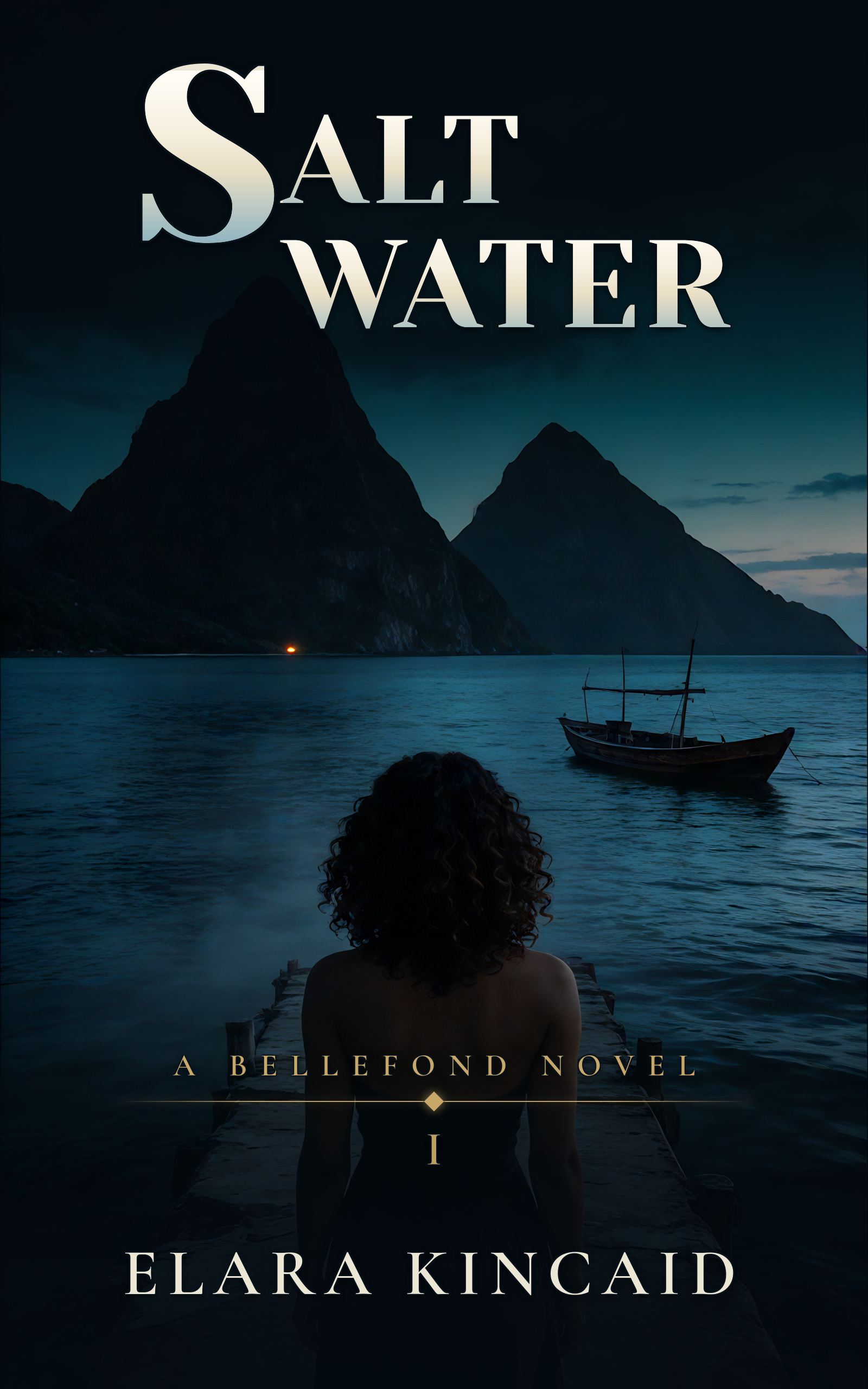
That is what stands between right now and the morning Saltwater goes live — October 6, if you are counting with me, and I am counting with you. I have written a lot of "coming soon" posts this year, and this is the one where soon stops being an abstraction and starts being a date on a calendar I can see from here.
So instead of another round of "meet the characters" or "here is the island," I want to use this one to talk about something I have not said out loud yet: what I actually think makes a Caribbean crime novel work as crime, and not just as a postcard with a body on it.
The problem with "tropical noir"
Here is a confession. When I started building this series, I read a stack of Caribbean-set thrillers to see what the shelf already looked like, and too many of them made the same mistake. They treated the setting as a mood and the crime as an afterthought. Palm trees, a rum punch, a detective who is really just a version of a detective from somewhere colder wearing a linen shirt. The island supplies the weather. The plot could have happened anywhere.
I did not want to write that book. I wanted the crime to come from the place — to be a thing that could only happen here, built out of the actual pressures a real island economy carries. That is the difference, I think, between a book that uses the Caribbean and a book that is actually about it.
Why the crime had to be real
This is the part I am proudest of, so bear with me while I geek out for a minute.
The engine underneath Saltwater is not an invented shadow conspiracy. It is something that genuinely exists across several Caribbean nations: citizenship-by-investment programs, where a large enough real-estate purchase — a resort development, say — can buy a foreign national a passport. It is a real, legal, heavily marketed mechanism. It is also, in the wrong hands, an extraordinarily clean way to move dirty money through a beautiful coastline and come out the other side a citizen with a new name and a view of the water.
I did not invent that seam. I found it, and once I saw it, I could not unsee how well it fit a crime novel. A resort is not sinister on its own — resorts are just buildings. But a resort that needs a specific parcel of working shoreline signed over on a specific deadline, financed through a mechanism that turns money into a passport, sitting a hundred yards from a fishing co-op that has worked that exact water for six generations — that is not scenery anymore. That is a motive with a paper trail. That is the kind of crime that only exists because the place exists.
That is the standard I kept coming back to while I wrote this: could this exact crime happen on a fictional island in a fictional ocean, or does it need this island, with its real history and its real economics, to make sense? If the answer was "anywhere," I threw the scene out and started again.
What I stole from the writers I admire
I am going to name names, because I think craft conversations are more useful when they are specific.
S.A. Cosby writes small Southern towns where the corruption is not a criminal mastermind, it is the ordinary machinery of who owns the land and who works it — and the horror is how mundane that machinery looks from the inside. Attica Locke does something similar with oil money and old land claims in Texas: the crime is downstream of an economic fact that was already sitting there before anyone got killed. Kwei Quartey writes Ghana with a procedural specificity that never once turns the setting into wallpaper — his detective's world has its own institutions, its own rules, its own version of how justice actually gets done there, not an import from a British mystery.
What all three of those writers taught me, reading them while I built this series, is that the setting has to generate the crime, not just host it. The corruption has to be load-bearing. If you could lift the plot up and set it down in a different country with different names on the map and lose nothing, you have written a story about a body. If you cannot move it without the whole thing collapsing, you have written a story about a place.
I wanted to write the second kind. I do not know yet if I managed it. That is a question for readers, not for the writer.
The co-op and the marina
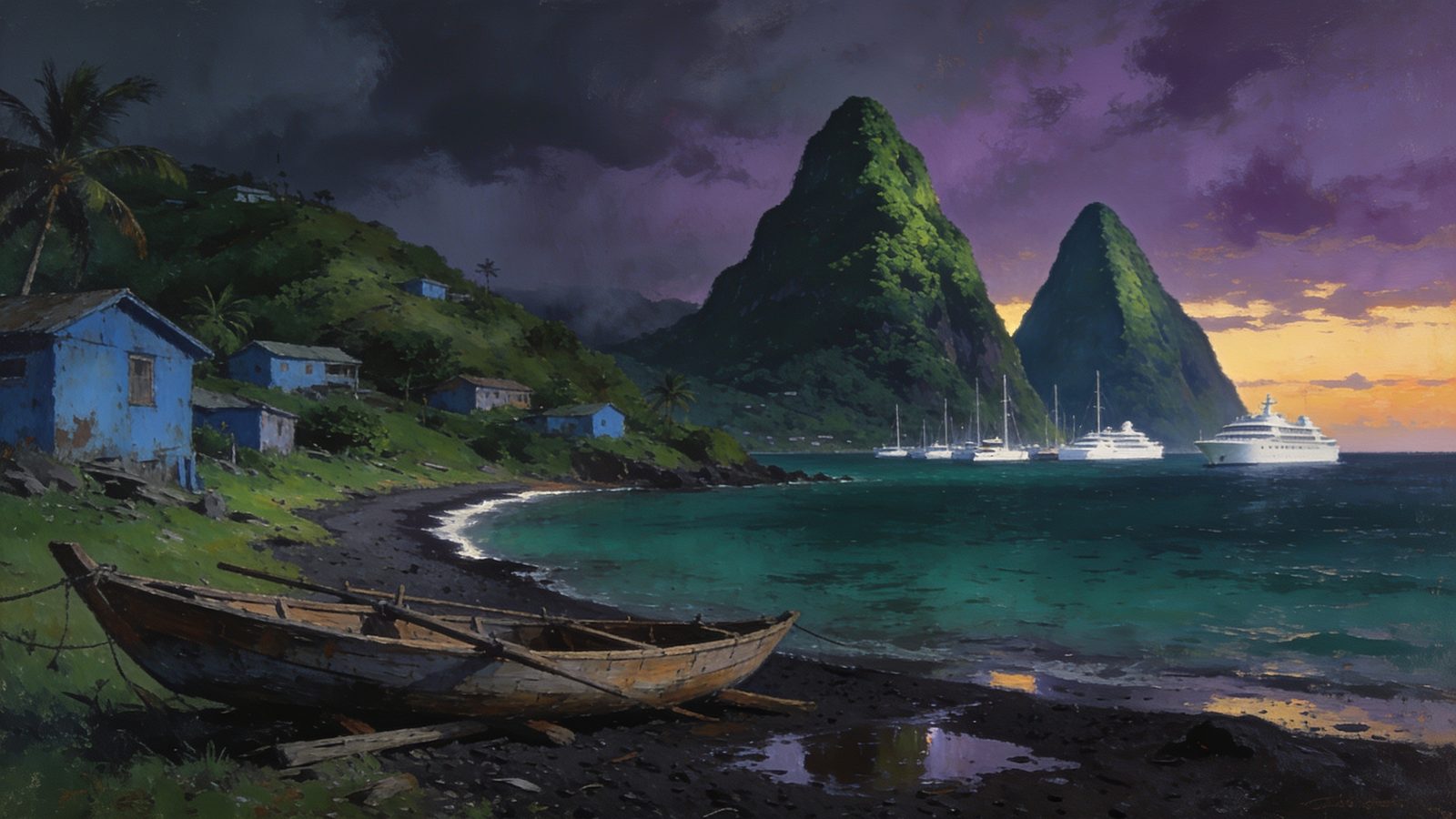
If you have read why I set this series in Saint Lucia, you already know the geography I built the whole thing around: one working bay, a fishing co-op on one side and an all-inclusive marina on the other, close enough to share a tide table and far enough apart to pretend they are not in the same economy. That gap is not set dressing. It is the actual crime scene, in the structural sense — the place where a citizenship-by-investment deal, a falsified survey, and a drowned man's private notebook all end up pointing at the same twenty-day deadline.
Séraphine Toussaint is the person standing in that gap asking questions nobody in Bellefond wants asked, which is exactly the job description of a good investigative-journalist protagonist: not a detective with a badge, but someone with a reason to already be trusted, and a reason not to let a comfortable lie sit unchallenged.
Thirty days
I say this every time and I mean it more each time: I have no existing readership for this pen name in this genre. Fallen Hearts readers found me through slow-burn romance, and I am deeply grateful for every one of you who has followed me somewhere darker. But a launch like this lives or dies on the people who hear about it first and decide it is worth a look — not an algorithm, not an ad, just a reader telling another reader.
So here is what thirty days out actually looks like from my side of the desk: the manuscript is locked, the cover is finished, and the only thing left to do is wait, and tell you about it. If you want to be there the morning it goes live — first look at the opening pages, the actual release-day reminder, no noise in between — the newsletter is where I will be sending it.
Thirty days. I will see you on the water.
— Elara